
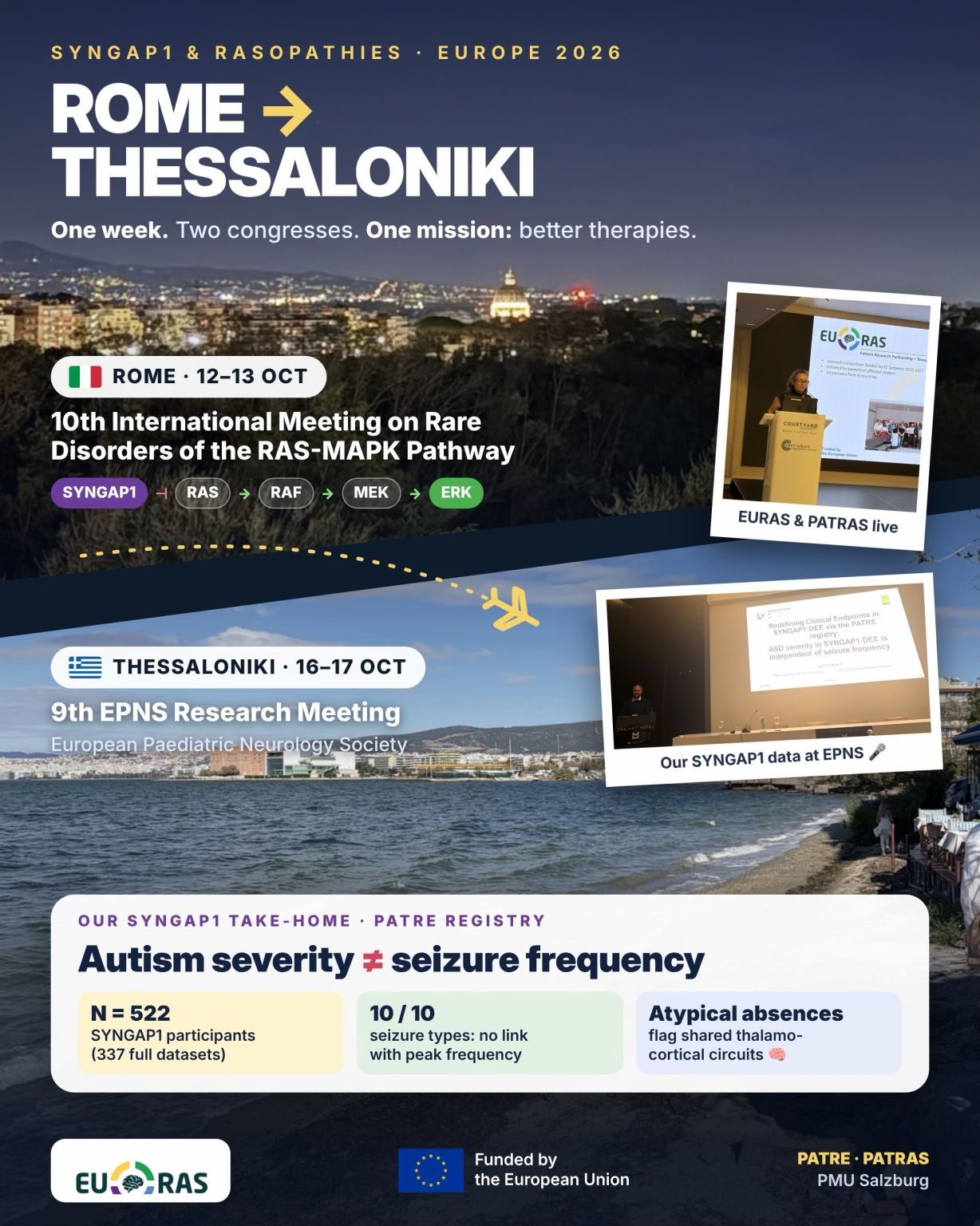
One week, two congresses, one mission: better therapies
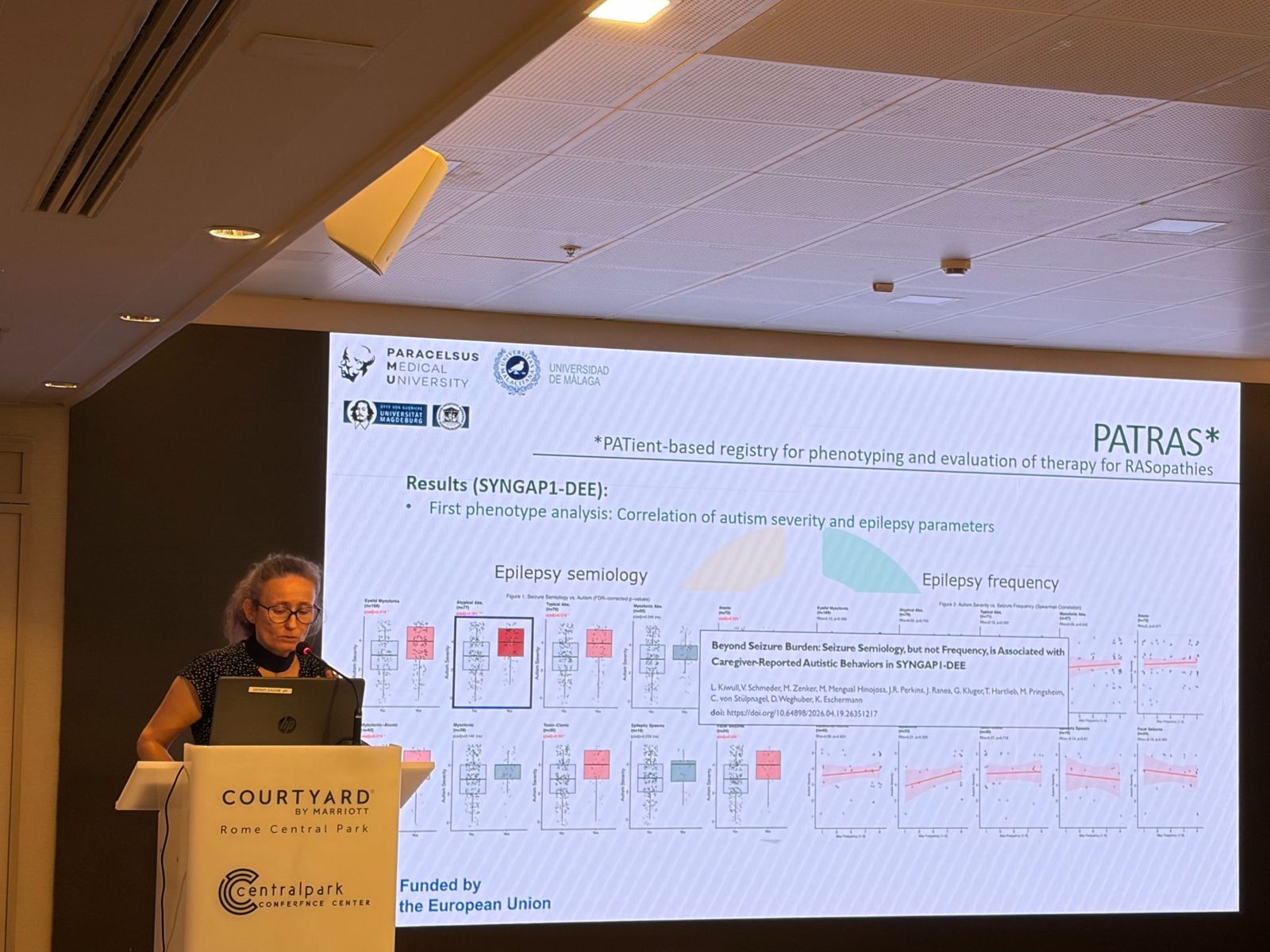
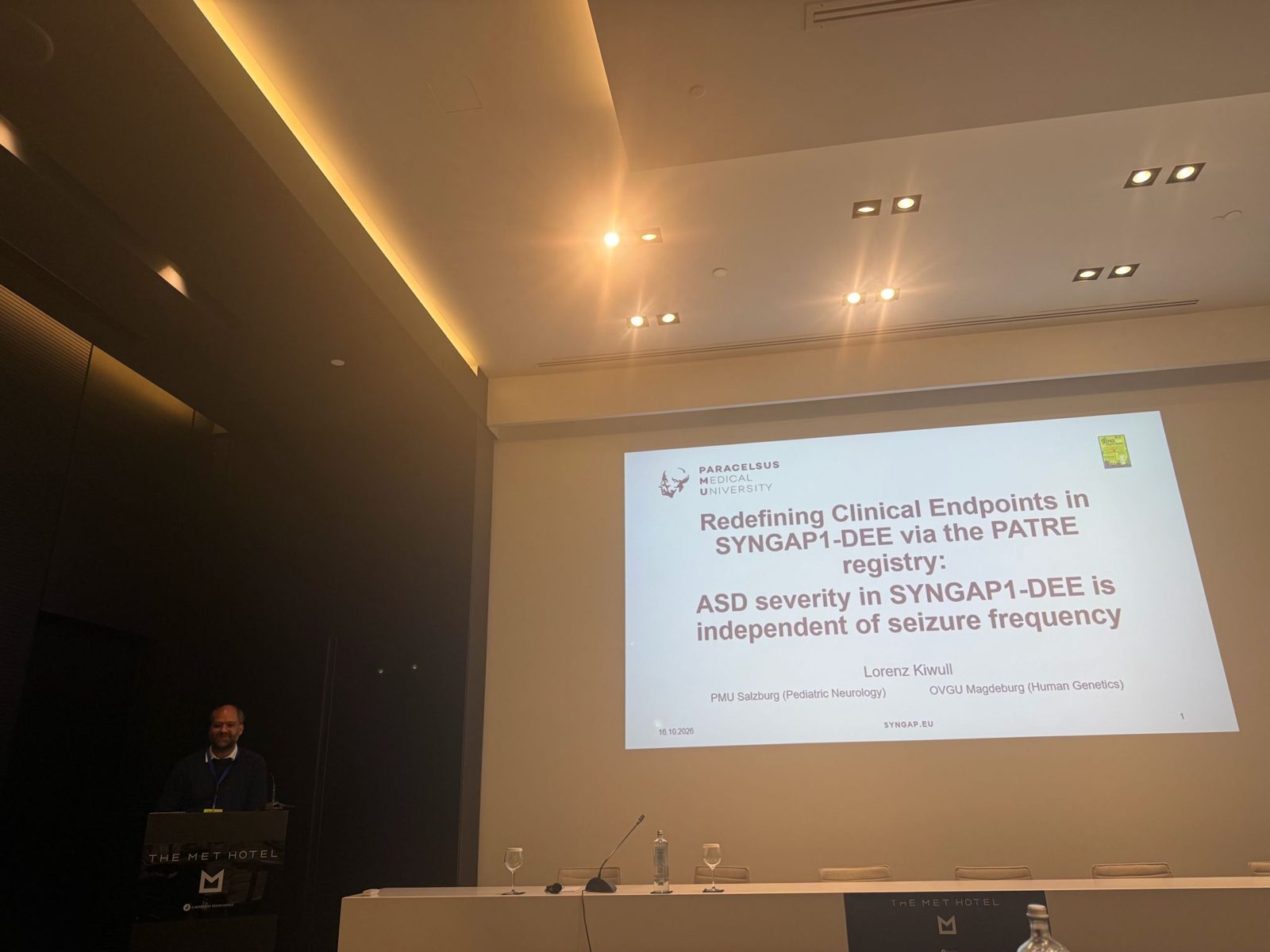
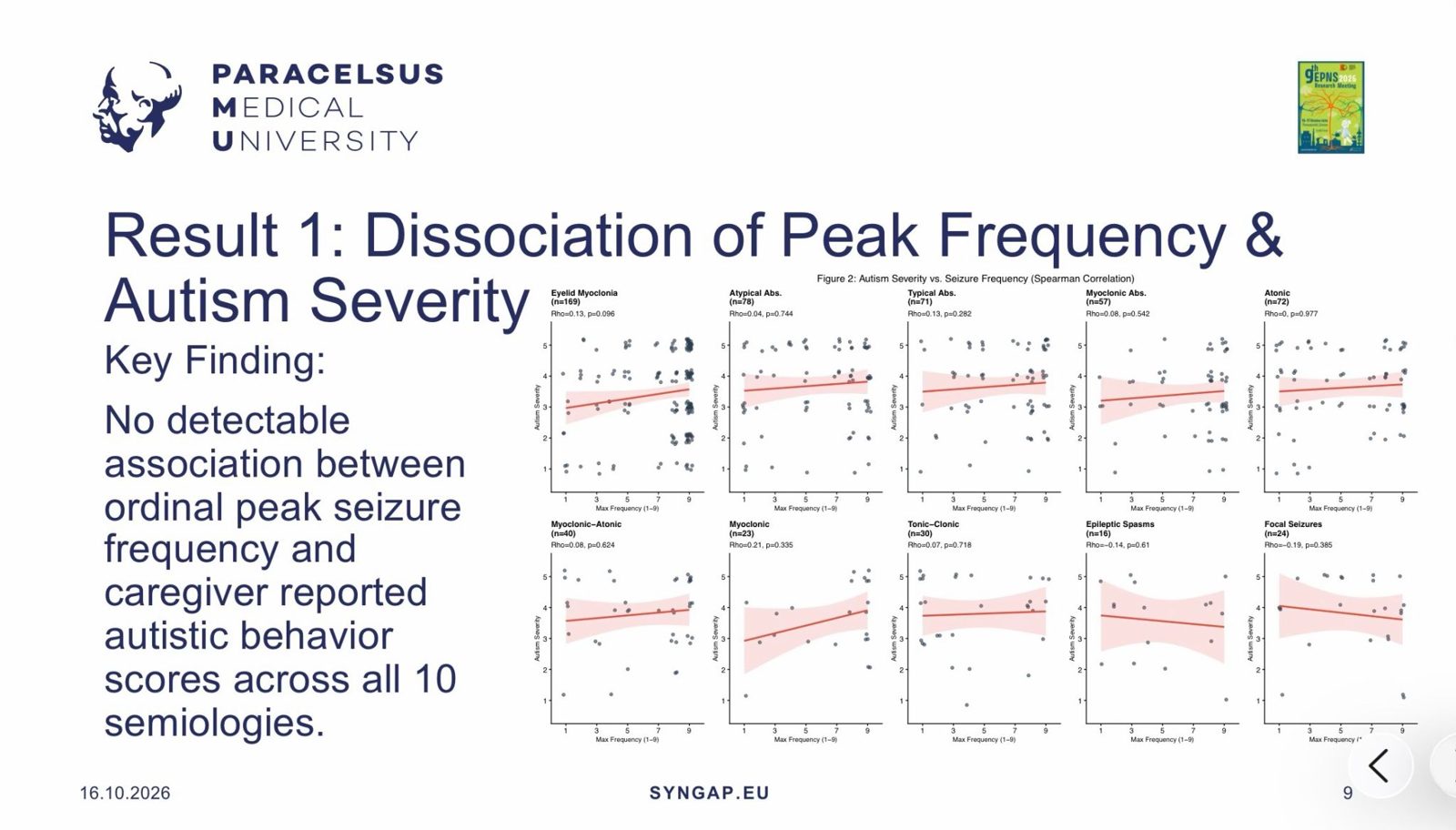
In October, our team presented new findings from the PATRE and PATRAS registries at two major European meetings. A central question: is the severity of autism-related behavior in SYNGAP1 driven by how often seizures occur? Our data suggest it is not.
Autism severity ≠ seizure frequency
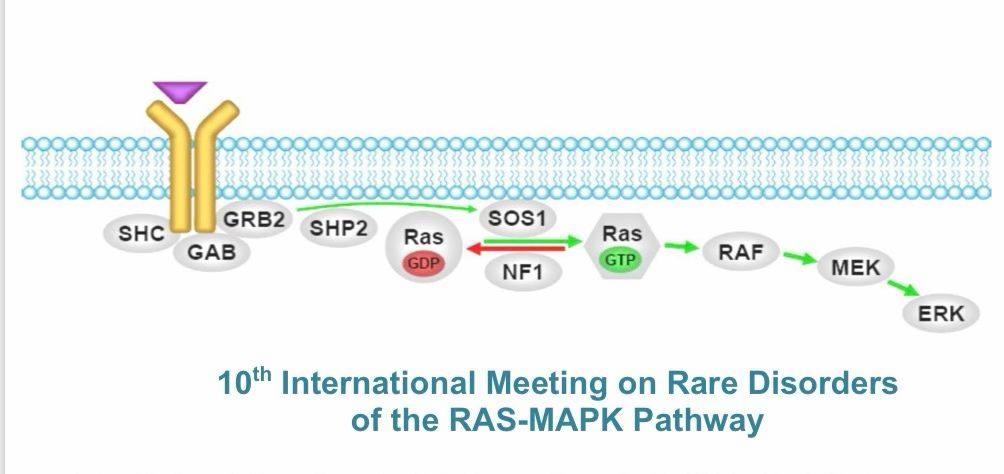
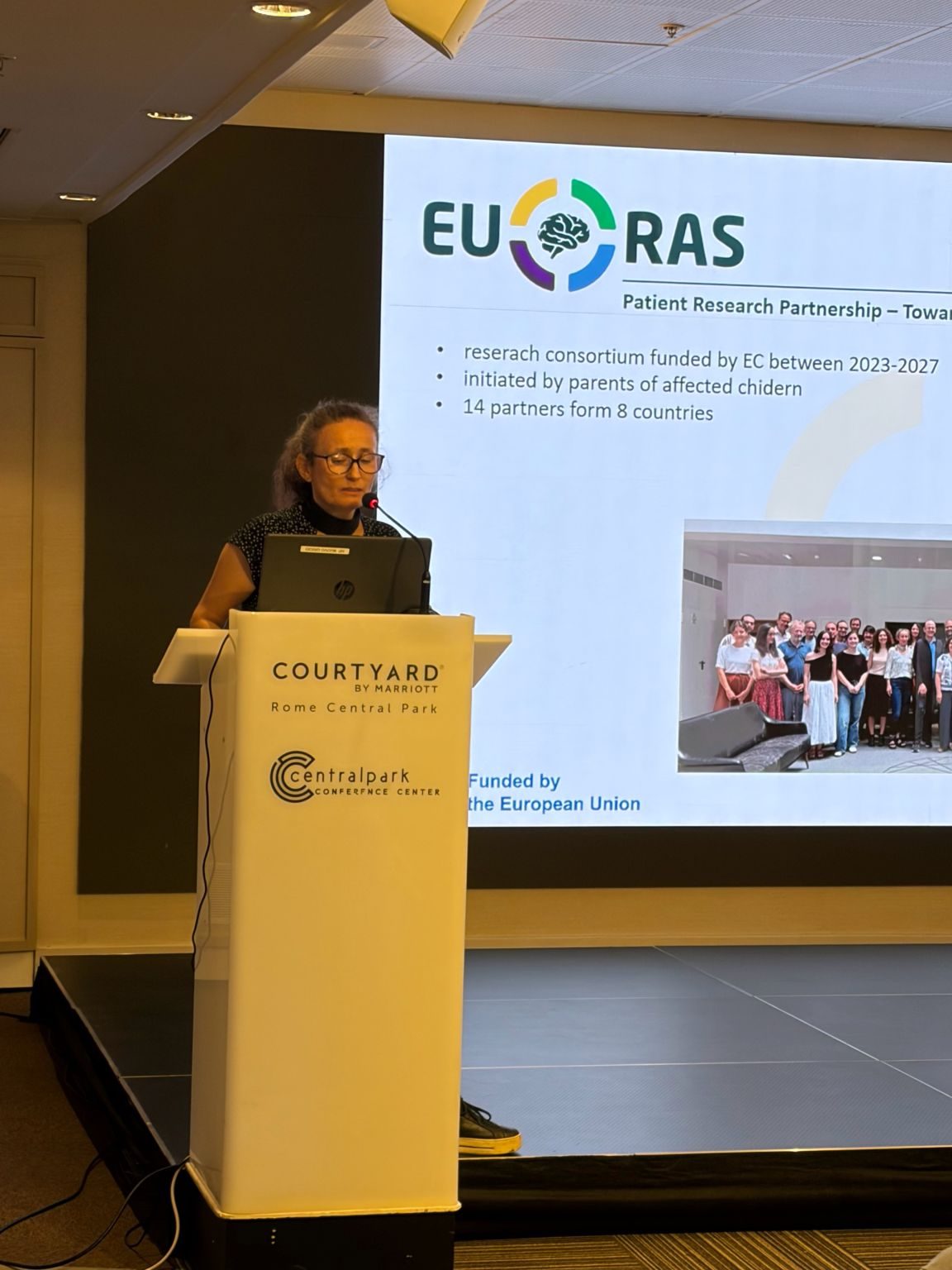
10th International Meeting on Rare Disorders of the RAS-MAPK Pathway
We thank ERN-ITHACA, the SEDRA Foundation and the Scientific Board (Marco Tartaglia, Alain Verloes, Emma Burkitt-Wright and Martin Zenker) for an excellent meeting. The discussions gave important directions for our ongoing work on SYNGAP1 and the RASopathies.

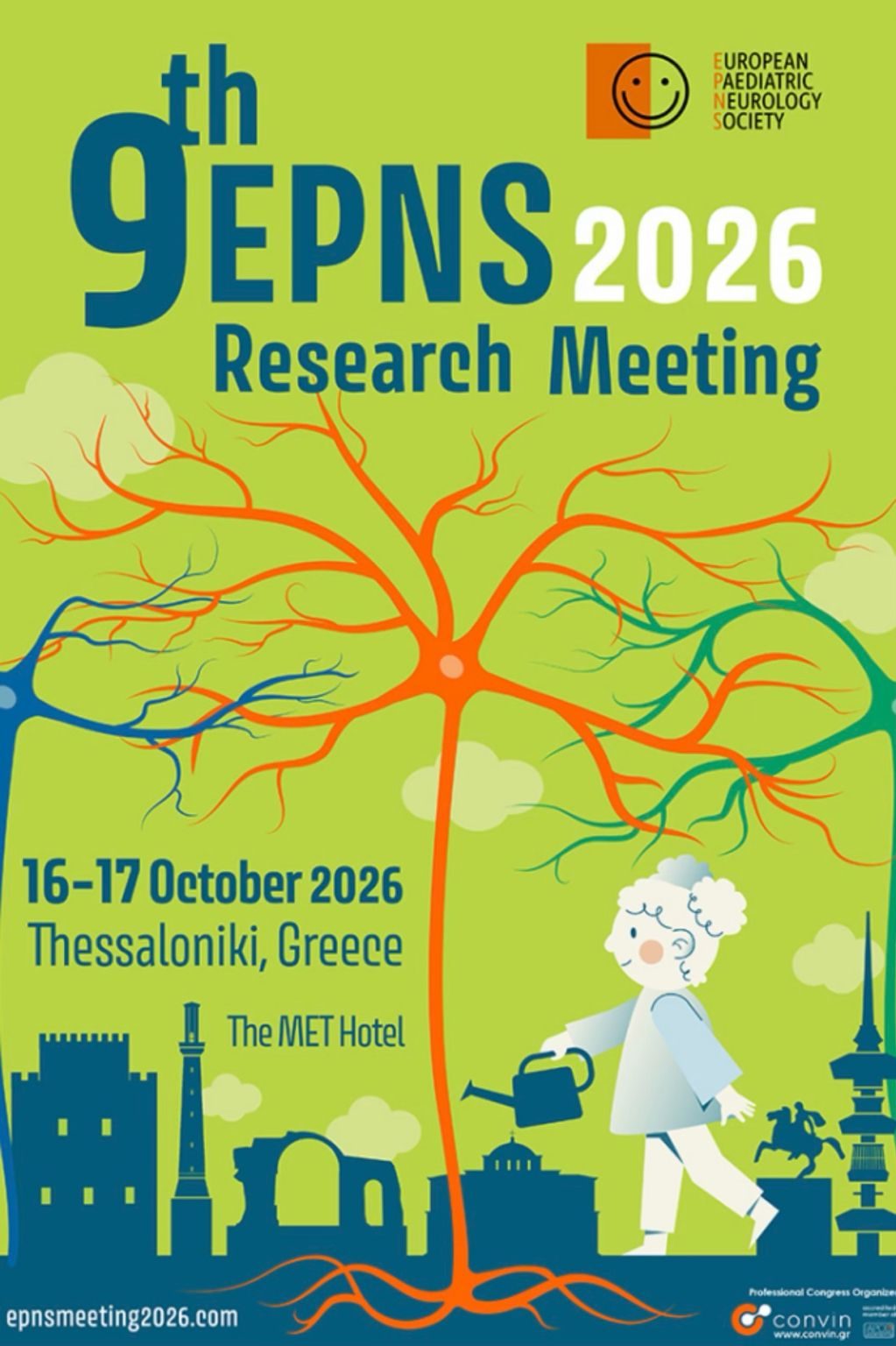
9th EPNS Research Meeting
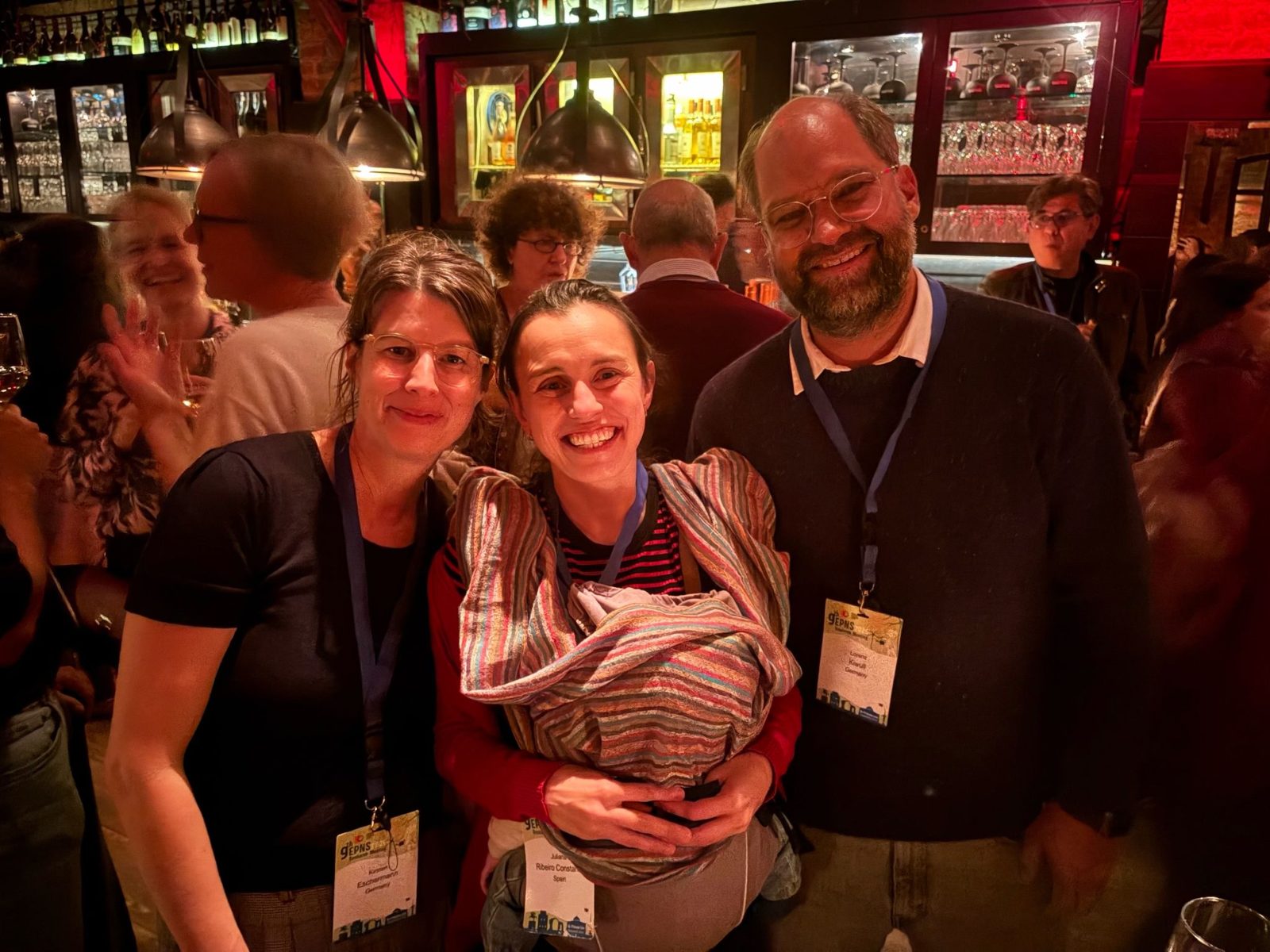
We thank the European Paediatric Neurology Society (EPNS) and our local hosts, Dimitrios Zafeiriou and Pinelopi Dragoumi, for a constructive research meeting, and the chairs of the Fetal & Neonatal Neurology Working Group, Regina Trollmann, Lucia Gerstl and Agnese Suppiej, for their invitation and the scientific discussion.
Clinical findings from the PATRE registry
Of 522 SYNGAP1 participants, 337 had completed both the epilepsy and the behavior questionnaire. Caregiver-reported autism-related behavior showed no correlation with peak seizure frequency in any of 10 seizure types. Atypical absences stood out, suggesting a role of shared thalamocortical circuits.

Seizure control alone is not enough
Our key takeaway from both meetings: for people with SYNGAP1, prioritizing seizure control alone is insufficient. Precision therapies must target the neuronal circuits underlying cognition and behavior. This requires growing clinical registries and continued collaboration with families and research partners across Europe.
Thank you
Our deepest gratitude goes to every family affected by SYNGAP1 and RASopathies who contributes to the PATRE and PATRAS registries. This work would not be possible without the foundational work of SYNGAP Elternhilfe e.V. (led by Verena Schmeder and Marcos Mengual Hinojosa) and the EURAS project.
The preprint has not yet been peer-reviewed. Findings are based on caregiver-reported registry data.