New Preprint Release: Investigating the Link Between Seizure Frequency and Autistic Behavior in SYNGAP1

Recently, a new large-scale preprint utilizing data from the PATRE registry (N=337) was published, addressing a long-standing question in the study of developmental and epileptic encephalopathies (DEEs).

Historically, a prevailing clinical assumption suggested that the severity of behavioral challenges in epilepsy patients was directly proportional to how often seizures occurred. While the medical and research communities have recently begun to suspect that this connection might not hold true for DEEs, large-scale empirical data to support this shift in thinking has been lacking.

Our latest publication finally provides the necessary data for SYNGAP1, revealing two crucial clinical takeaways:

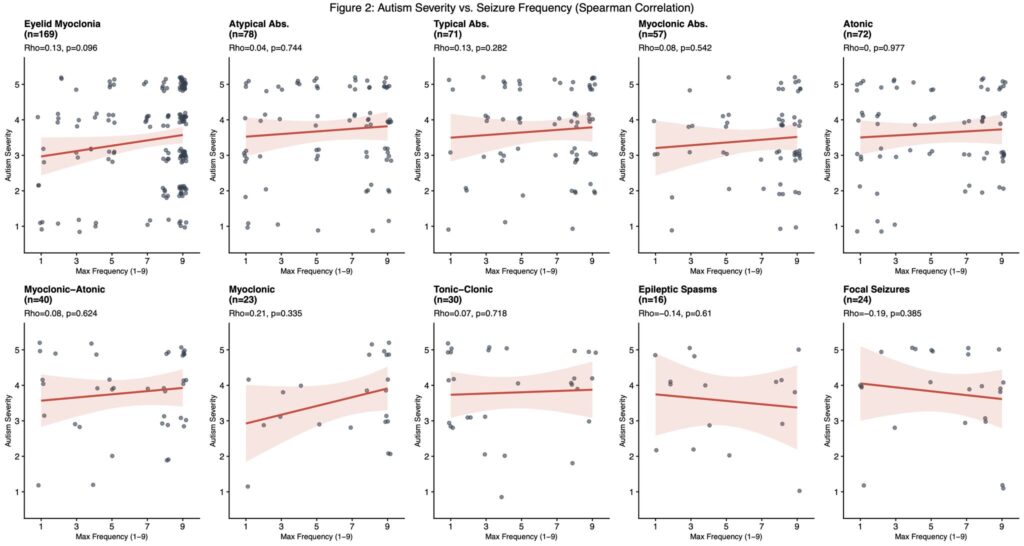
  • Autism Severity is Independent of Seizure Frequency: Our analysis demonstrates that caregiver-reported autism severity is entirely independent of the maximum caregiver-reported seizure frequency. This finding highlights that the neurodevelopmental burden in SYNGAP1 is highly complex and extends far beyond the simple quantitative counting of seizures.
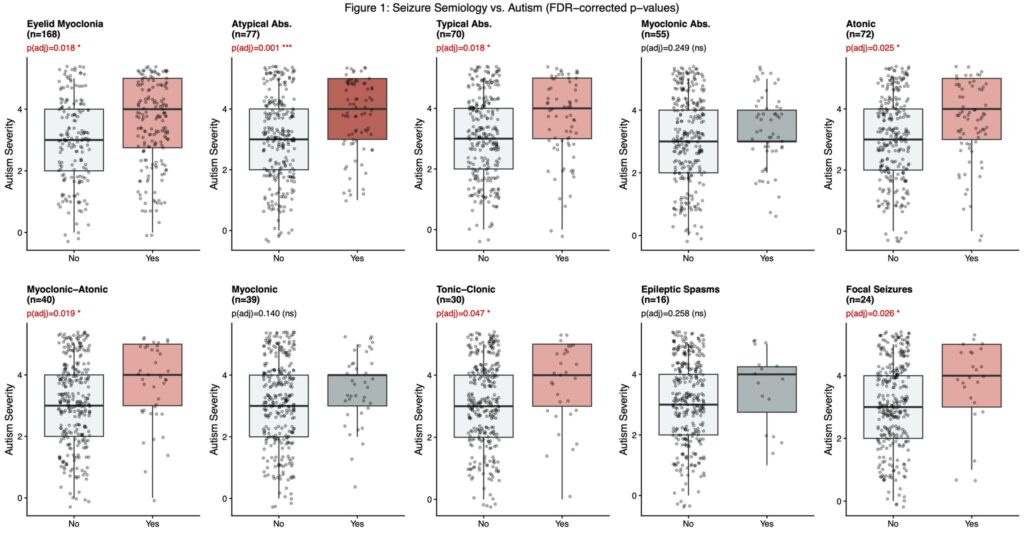
  • Atypical Absences as a Clinical Marker: The data suggests that qualitative factors play a highly significant role. Specifically, the presence—rather than the frequency—of caregiver-reported atypical absences serves as a critical clinical marker associated with higher caregiver-reported autistic behaviors (FDR-adjusted p = 0.001).

The Power of the PATRE Registry

Milestones in DEE research like this are only possible through the dedication of our community. Your willingness to share your daily realities via the PATRE registry is what drives these medical breakthroughs forward.

We extend our deepest gratitude to all participating patients, parents, families, and advocacy organizations. Special thanks to SYNGAP Elternhilfe e.V. & Syngap Global Network (SGN).

We also thank the EURAS Project consortium and all contributing co-authors across Europe.

Read the full preprint here: https://www.medrxiv.org/content/10.64898/2026.04.19.26351217v1
Poster at IEC 2025 Lisbon

Empowering Patients in Research – First Insights from 444 Participants in the PATRE SYNGAP1 Registry

We are proud to share that our work on the PATRE SYNGAP1 Registry was presented at the International Epilepsy Congress (IEC) 2025 in Lisbon.

Our poster, presented by Kirsten Eschermann, was selected for the prestigious ILAE YES (Young Epilepsy Section) Poster Tour – Poster #363.

Why this matters

The PATRE SYNGAP1 Registry was created together with families, clinicians, and researchers as part of the EURAS Horizon Europe consortium. It is a multilingual, app-based platform that empowers families to directly contribute health information and experiences. This data helps researchers understand SYNGAP1-related encephalopathy and accelerates the path towards new therapies.

Key results from 444 SYNGAP1 participants

🔹 Developmental milestones are consistently delayed:

  • Sitting unsupported: ~12 months
  • Walking independently: ~28 months
  • First two-word sentences: ~47 months

🔹 Functional outcomes (PEDI-CAT):

  • Daily activities & Social/Cognitive: ~4th percentile
  • Mobility: ~12th percentile

🔹 HPO-based phenotyping (systematic clinical feature mapping):

  • High frequency of neurodevelopmental features (motor delay, speech delay, autistic behaviors)
  • Frequent epilepsy-related phenotypes (generalized motor & non-motor seizures, absence seizures, myoclonic-atonic seizures)
  • Behavioral and sensory features (hyperactivity, self-injury, abnormal pain sensation, sleep disturbance)
  • Comorbidities including vision problems, scoliosis, growth abnormalities

This comprehensive HPO dataset provides one of the most detailed phenotypic landscapes of SYNGAP1 to date, demonstrating the power of structured, patient-driven data collection.

Looking ahead

The PATRE platform is designed to be a model for rare epilepsies and neurodevelopmental disorders. By combining patient engagement with standardized data elements, we are building a resource that will:

  • Support preclinical models and therapeutic development
  • Enable international collaboration across research groups
  • Provide families with a stronger voice in research

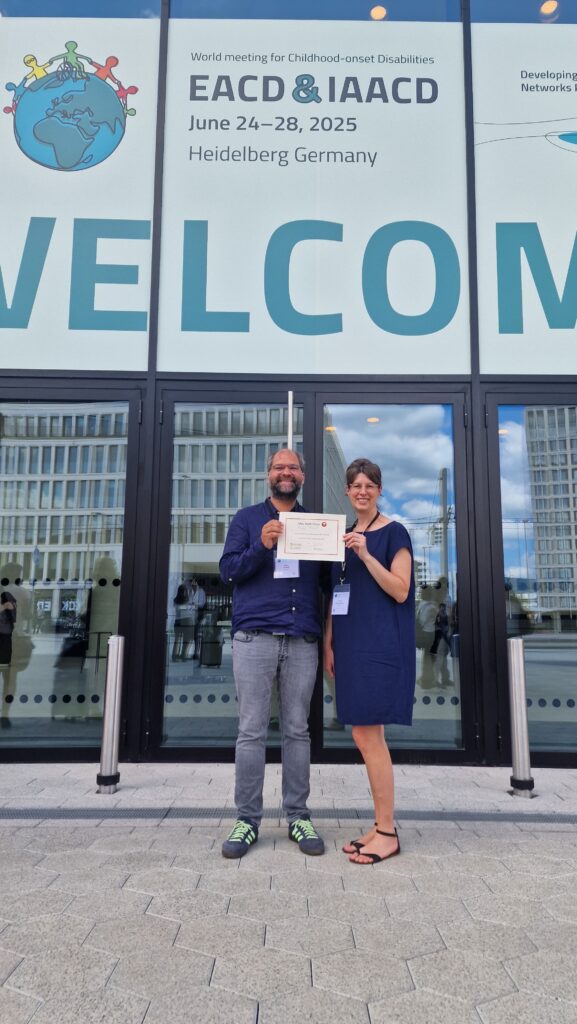
PATRE Abstract Wins Mac Keith Press Best Abstract Award at EACD/IAACD 2025

We are delighted to share that our abstract

“Empowering Patients in Research: Insights from the World’s Largest SYNGAP1 Registry”

has been awarded the Mac Keith Press Best Abstract Award 2025 at this year’s EACD/IAACD Congress in Heidelberg.

This prestigious award honors the highest-rated abstract of the entire congress. With over 1,200 abstracts submitted from more than 80 countries, the selection process is highly competitive. The jury—appointed by Mac Keith Press, the nonprofit publisher of Developmental Medicine & Child Neurology—evaluates submissions based on originality, methodological quality, clinical relevance, and clarity of presentation. Our abstract was selected as the top submission of 2025.

The EACD/IAACD Congress is the world’s largest interdisciplinary conference on childhood disability. Held only every three years in cooperation with the International Alliance of Academies of Childhood Disability (IAACD), the event brings together clinicians, researchers, therapists, and family advocates from across the globe.

The award-winning abstract highlights the patient-centered approach of the SYNGAP1 Registry and its integration into PATRE and the EURAS project, showcasing how families’ active participation can drive scientific discovery in rare diseases.

We accepted the award on behalf of the entire team – but this recognition belongs to all collaborators who contributed their trust, time, and expertise to this shared effort.

A special thank you goes to the many SYNGAP1 families whose commitment made this research possible in the first place.

📎 Read also the official announcement on the EURAS website:

👉 www.euras-project.eu/news-events

EURAS

PATRE is very proud to have co-initiated the HORIZON EUROPE consortium EURAS.

PATRE is responsible for the patient registries in the consortium together with the University of Magdeburg.

Here is the link to a press release (in German).

This image has an empty alt attribute; its file name is euras_eu.png